
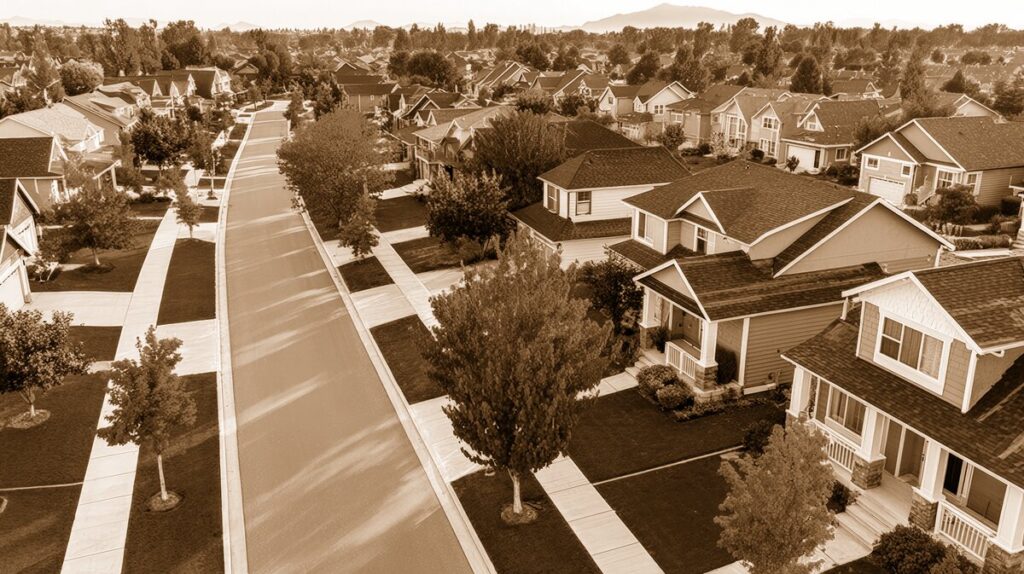
A Neighborhood with a Water-Bound Identity
Lake Chester Park is one of those Eastchester neighborhoods whose character is easy to recognize even if its history is not always written on a roadside marker. Tucked along the Lake Innisfree shoreline and centered around Lake Shore Drive, it is a residential enclave shaped by water, winding streets, mature trees, and the steady rhythm of family life.
Today, the name *Lake Chester Park* most often appears in real-estate and property records as the name of the subdivision. It is closely associated with the Lake Isle section of Eastchester, a distinctive residential area that occupies roughly 80 acres and forms a triangular shape between Lake Innisfree and Lake Isle Park. ([homes.com](https://www.homes.com/property/17-lakeshore-dr-eastchester-ny/psjwmnq5sejs5/?utm_source=openai))
For longtime residents, however, the neighborhood is more than a planning designation. It is a place of lakeside views, quiet drives, backyard gatherings, and the familiar sight of neighbors walking toward the water or heading across town along California Road.
Before the Houses: Farms, Woods, and Reservoir Land
Like much of Eastchester, the land around Lake Chester Park began as rural countryside. During the eighteenth and nineteenth centuries, the area consisted largely of woodland, open fields, and farms held in substantial parcels. The land was part of the broader agricultural landscape that shaped Eastchester before suburban development began to accelerate.
The body of water now known as Lake Innisfree was originally created as a reservoir. It has also been known as Lake Isle and Interlaken, while its earliest designation was Reservoir No. 1. The man-made lake extends across the Eastchester-New Rochelle border and is connected to the Hutchinson River system. ([en.wikipedia.org](https://en.wikipedia.org/wiki/Lake_Innisfree?utm_source=openai))
That history helps explain the neighborhood’s distinctive form. Rather than being laid out as a conventional grid, the streets respond to the shoreline, the lake crossing, and the surrounding parkland. The result is a community that feels set apart from the busier roads nearby.
How Lake Chester Park Got Its Name
The exact origin of the name Lake Chester Park is not documented as clearly as the history of Lake Isle or Lake Innisfree. The most practical explanation is that it combines the natural setting—“Lake”—with the town name—“Chester”—and the language of early suburban development, when builders frequently marketed residential tracts as parks.
The name also reflects Eastchester’s long relationship with planned residential neighborhoods. In the late nineteenth and early twentieth centuries, developers across Westchester used names such as park, manor, acres, and gardens to present new subdivisions as attractive alternatives to crowded city living. Lake Chester Park belongs to that tradition: a neighborhood name designed to emphasize landscape, privacy, and proximity to water.
Over time, the official subdivision name became less common in everyday conversation. Residents are more likely to say they live near Lake Isle, Lake Shore Drive, or California Road. Still, Lake Chester Park remains part of the neighborhood’s documentary identity, appearing in property descriptions and municipal records.
The Lake Isle Connection
The most important landmark in the neighborhood is, naturally, the lake itself. Lake Innisfree is both a geographic boundary and the feature that gives the area its atmosphere. Homes along Lake Shore Drive face or back toward the water, creating a rare lakeside residential setting in suburban Westchester. The town’s neighborhood analysis notes that houses along the southern edge front on Lake Shore Drive and back toward the lake, giving the community its characteristic waterfront orientation. ([cms5.revize.com](https://cms5.revize.com/revize/eastchester/departments/docs/11_Neighborhood%20Analysis.pdf?utm_source=openai))
At the northern end of the neighborhood lies Lake Isle Park, a major recreational presence in Eastchester. The park and the lake together provide the open space that makes the area feel less like a conventional subdivision and more like a small landscape district.
Nearby Lake Isle Country Club has also been an important institution in Eastchester’s recreational history. Though its facilities serve the wider town, the club contributes to the sense that this part of Eastchester has long been associated with leisure, golf, swimming, tennis, and outdoor life.
Roads That Tell the Story
A walk through Lake Chester Park reveals how the neighborhood developed gradually rather than all at once. Lake Shore Drive remains the defining road, following the waterfront and crossing Lake Innisfree toward New Rochelle. The road’s bridge is not merely a transportation link; it is one of the neighborhood’s most memorable visual features, especially in changing seasons.
Access from Eastchester is primarily through the Lake Shore Drive and California Road intersection, a limited approach that helps preserve the enclave’s quiet character. ([cms5.revize.com](https://cms5.revize.com/revize/eastchester/departments/docs/11_Neighborhood%20Analysis.pdf?utm_source=openai))
This relative seclusion has shaped local life for generations. Children have grown up with the lake as a constant backdrop, while adults have enjoyed the privacy of streets that do not carry heavy through-traffic. The neighborhood’s trees, setbacks, and varied house styles add to its established appearance.
The Mid-Century Suburban Years
Many of the homes associated with Lake Chester Park date from the middle decades of the twentieth century, when Eastchester was changing from a semi-rural town into a fully developed suburban community. The postwar years brought new families, new construction, and a growing demand for homes within commuting distance of New York City.
Property records for the subdivision show homes dating to the 1950s, a period when residential construction expanded throughout Westchester. ([propertyreach.com](https://www.propertyreach.com/ny/scarsdale/elba-pl?utm_source=openai)) The houses built during this era helped establish the neighborhood’s present visual identity: comfortable single-family homes, generous lots, attached garages, fireplaces, patios, and designs that took advantage of the surrounding landscape.
Over the decades, many houses have been renovated or expanded. Kitchens have been modernized, older windows replaced, and additions carefully fitted into the original suburban footprints. Yet the neighborhood has retained much of its mid-century character because the shoreline, street pattern, and mature landscaping remain intact.
A Neighborhood That Continues to Evolve
Lake Chester Park has changed in quiet, incremental ways rather than through dramatic redevelopment. Generations have come and gone, but the essential features remain: the lake, the park, the bridge, and the intimate network of residential streets.
Its heritage is also tied to Eastchester’s wider institutions. The Eastchester Historical Society, headquartered at the Marble School House and supported by a historical library, preserves the town’s broader story—from its colonial beginnings to its suburban present. ([eastchesterhistoricalsociety.org](https://www.eastchesterhistoricalsociety.org/home.html?utm_source=openai))
What makes Lake Chester Park special is the way its history is experienced rather than announced. It is found in the curve of Lake Shore Drive, the changing shoreline of Lake Innisfree, the views from the bridge, and the houses that have sheltered families since the postwar era.
For a longtime resident, that is the neighborhood’s real legacy: a small corner of Eastchester where the past is still visible in the landscape, and where the quiet pleasures of lakeside living continue to shape everyday life.